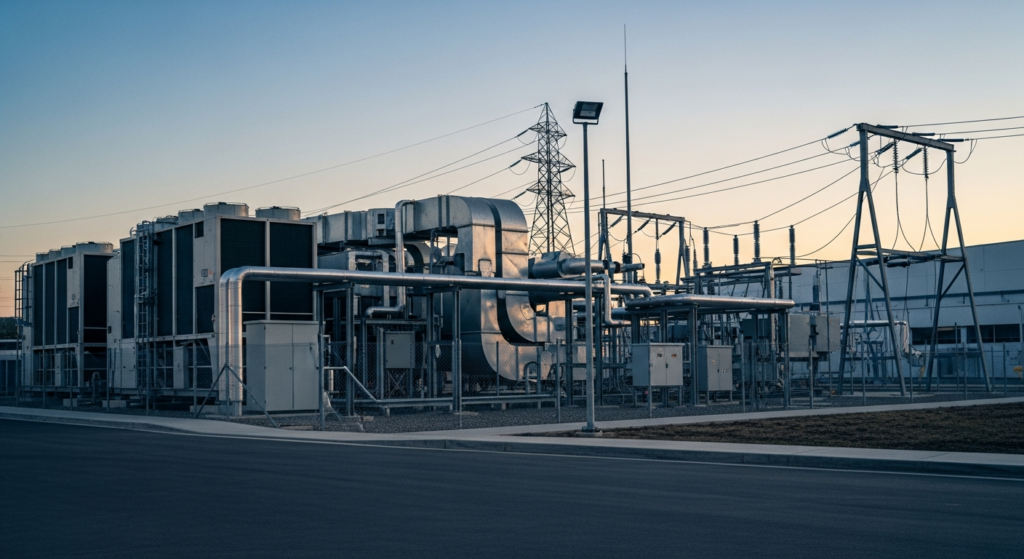
The escalating global demand for artificial intelligence infrastructure has placed an unprecedented focus on the capacity and reliability of electrical grids, a trend with significant implications for communities like Lexington. As companies worldwide invest heavily in the computing power necessary to run advanced AI models, the energy requirements of large-scale data centers are rapidly becoming a primary concern for business leaders and utility providers alike.
Industry analysis indicates a distinct shift in the bottleneck for AI development: where once the availability of specialized processing chips was the limiting factor, it is now the sheer amount of electrical power required to operate and cool these vast computing facilities. Modern AI data centers consume immense quantities of electricity, often equivalent to that of a small town, operating continuously and demanding stable, high-voltage supply. This escalating consumption is driving a re-evaluation of energy infrastructure, from generation to transmission and distribution, across the nation and within regions like the Midlands of South Carolina.
For Lexington, a growing community within Lexington County, this broader trend underscores the critical importance of robust and resilient power infrastructure. While specific AI data center projects may not yet be prominent within the immediate town limits, the regional power grid, which serves Lexington’s homes, businesses, and public institutions, is part of a larger interconnected system feeling the strain. Utility providers serving the area are facing increasing pressure to plan for future demand, which includes not only the organic growth of the population and commercial sectors but also the potential for energy-intensive industries, such as AI data centers, to seek locations with ample and affordable power.
Ensuring grid reliability is paramount. Uninterrupted power is essential for the daily operations of major employers in Lexington, including Lexington County School District One, Lexington County Government, and businesses like Walmart, Publix, and The Home Depot. Any significant disruption or instability in the power supply could impact everything from traffic signals and public safety systems to retail operations and the educational environment for students. Residents in neighborhoods such as Saluda River Club, Governors Grant, and Spence Plantation also rely on a consistent power supply for their homes and increasingly for remote work and digital services.
Local government bodies, including the Town of Lexington and Lexington County Government, play a crucial role in navigating these evolving energy landscapes. Town Administrator Rachelle Moody and Mayor Hazel Livingston, alongside the Lexington County Council, led by Chairman Darrell Hudson, are responsible for long-term planning that encompasses infrastructure development, zoning regulations, and ensuring the town’s readiness for future economic and technological shifts. These officials often engage with regional utility providers to understand capacity projections, identify potential vulnerabilities, and advocate for necessary upgrades to ensure the community’s energy needs are met. The process of upgrading grid infrastructure, from building new substations to enhancing transmission lines, is complex, requiring significant capital investment, extensive permitting, and often several years to complete.
Midlands Technical College — Lexington/North Lake Center, a key educational institution in the area, also represents a significant consumer of power and has an interest in grid stability. Beyond its own operational needs, the college could potentially contribute to addressing future energy challenges by training a workforce skilled in energy management, electrical engineering, and sustainable infrastructure development, aligning with the broader regional needs for technical expertise.
The discussions around energy planning extend beyond just meeting demand; they also involve considerations of energy efficiency and sustainability. As the energy footprint of advanced technology grows, there is an increased impetus to explore renewable energy sources and smart grid technologies that can enhance efficiency and reduce reliance on traditional power generation methods. While these are long-term strategies, the immediate challenge remains ensuring the existing infrastructure can handle the accelerating pace of demand driven by AI.
Why it matters in Lexington
The global pivot towards AI infrastructure and its associated power demands directly impacts Lexington by placing new pressures on the regional electrical grid. The reliability of this grid is not an abstract concept but a concrete necessity for the Town of Lexington’s continued growth, the operational stability of its largest employers like Lexington County School District One and Avtec, and the daily lives of its residents. Proactive planning by the Lexington County Government and local utility providers is essential to ensure that the town’s infrastructure can support future economic development and maintain the quality of life for its citizens, preventing potential strains on services and businesses that depend on a consistent power supply. The decisions made today regarding energy investment and infrastructure upgrades will determine Lexington’s resilience and attractiveness as a place to live and conduct business in the coming decades.
Section: More Lexington SC business news