

Columbia, South Carolina, September 19, 2025
News Summary
St. Paul’s Lutheran Church in Columbia has voted to initiate disaffiliation from the Evangelical Lutheran Church in America (ELCA), with a forthcoming second vote set for November 2025. The church’s concerns about ELCA’s direction, particularly regarding activism and liturgical changes, prompted this discussion. If disaffiliated, the church may align with the North American Lutheran Church, reflecting a broader trend among congregations reevaluating their affiliations amid cultural divisions.
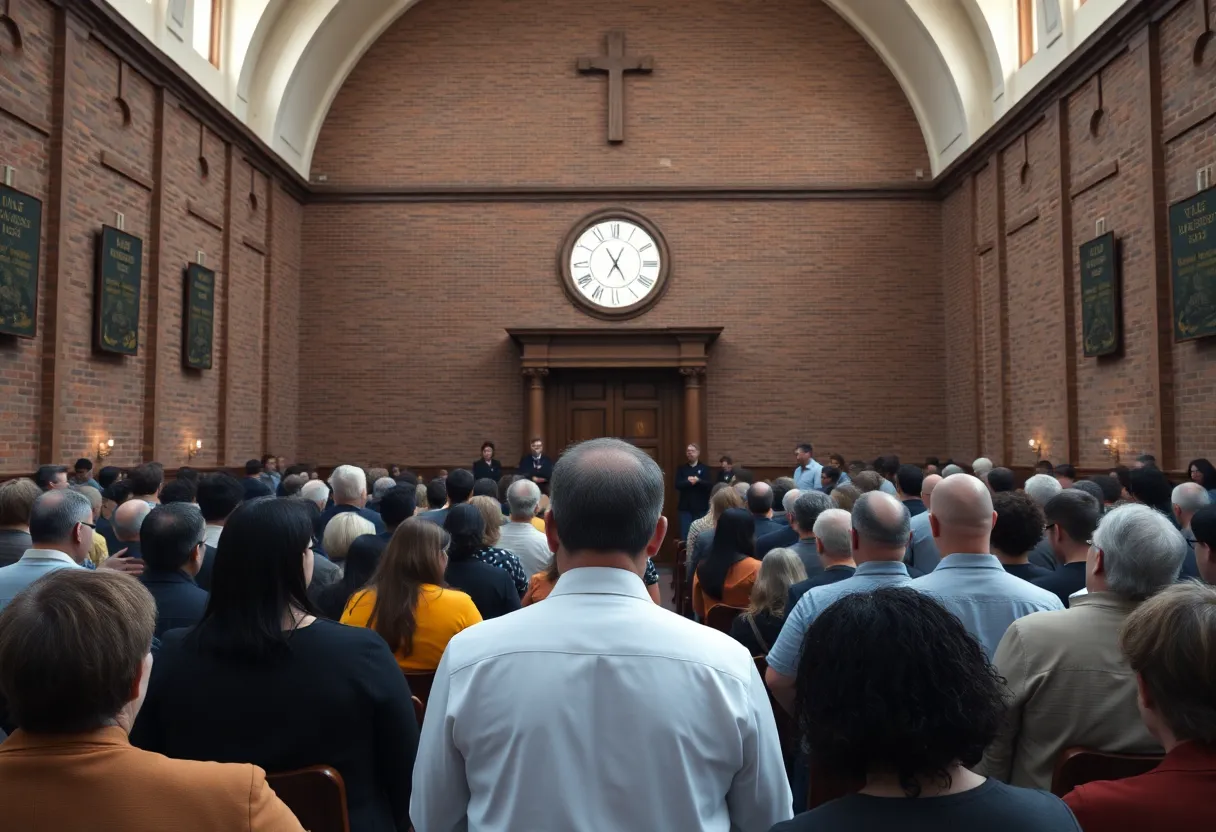
Columbia, South Carolina – St. Paul’s Lutheran Church has voted to take the first step toward disaffiliating from the Evangelical Lutheran Church in America (ELCA), the largest Lutheran denomination in the U.S. The initial vote saw 88 church members in favor of disaffiliation and 31 against it. This decision requires a second vote to confirm, which is scheduled for November 16, 2025. A two-thirds majority will be needed in the upcoming vote to finalize the separation from ELCA.
If the church proceeds with disaffiliation, it may join another denomination, notably the North American Lutheran Church (NALC), which branched off from the ELCA in 2010. The thought of leaving the ELCA began to take shape earlier this year, coinciding with the retirement of St. Paul’s longtime pastor. During the search for a new pastor, congregation members expressed concerns about the ELCA’s direction, prompting discussions around the possibility of disaffiliation.
The church council, comprising ten members, unanimously voted in August to support the disaffiliation after engaging with leaders from both the ELCA and the NALC. St. Paul’s Lutheran Church has been an established congregation since 1886 and possesses its own property and finances, factors that could facilitate a smoother disaffiliation process.
Bishop Virginia Aebischer of the ELCA’s South Carolina synod stated that the denomination would respect the outcome of St. Paul’s upcoming vote. The ELCA allows congregations to disaffiliate without forfeiting their property as long as they continue as Lutheran entities. This aspect has made the process less contentious compared to disaffiliation processes in other denominations, such as the United Methodist Church and the Episcopal Church.
Concerns among members of St. Paul’s included perceptions of the ELCA taking activist positions, coupled with recent liturgical changes that some felt were not in harmony with the congregation’s beliefs. Aebischer pointed out that misinformation has been disseminated by the NALC regarding potential property loss and enforced pastoral appointments.
The trend at St. Paul’s is reflective of a wider movement among churches across various denominations that are realigning based on differing political, cultural, and theological perspectives, particularly regarding LGBTQ+ inclusion. This increasing polarization has led many congregations to reconsider their affiliations.
In light of the decision to potentially leave the ELCA, church community members are encouraged to partake in a 90-day period of prayer and discernment prior to the final vote. This period aims to assist in navigating the emotional implications of disaffiliation, as such decisions can create divisions within church communities, even among long-standing friendships.
Key Facts
- St. Paul’s Lutheran Church in Columbia has taken an initial vote to disaffiliate from ELCA, with 88 votes in favor and 31 against.
- A second vote is set for November 16, 2025, where a two-thirds majority is necessary.
- The church may join the North American Lutheran Church, formed from an ELCA split in 2010.
- Concerns raised by congregation members included ELCA’s activist positions and recent liturgical changes.
- Bishop Aebischer confirmed the ELCA would respect the outcome of St. Paul’s vote.
- The disaffiliation process is less contentious due to ELCA policies about property retention.
- A 90-day period of prayer and discernment is advised for the congregation.
Background Context
St. Paul’s Lutheran Church has been a mainstay in its community since 1886, making this potential disaffiliation a significant moment in its history. The church has been experiencing a broader trend affecting many congregations across various denominations as they grapple with internal divisions regarding theological and social issues. Discussions around LGBTQ+ inclusion have particularly fueled these divisions, leading to shifts in allegiances among many congregations. The question of property and pastoral leadership also remains a crucial element in these conversations.
Frequently Asked Questions
- What is the current status of St. Paul’s Lutheran Church regarding the ELCA?
- St. Paul’s Lutheran Church in Columbia has taken an initial vote to disaffiliate from the Evangelical Lutheran Church in America (ELCA), with 88 votes in favor and 31 against.
- When is the decisive second vote for disaffiliation scheduled?
- A second vote is set for November 16, 2025, where a two-thirds majority is necessary.
- What is the North American Lutheran Church?
- The North American Lutheran Church is a denomination that formed from a split within the ELCA in 2010, which St. Paul’s may potentially join if they disaffiliate.
- What concerns did St. Paul’s members raise regarding the ELCA?
- Concerns among congregation members included perceived activist positions taken by the ELCA and recent changes in liturgy that some felt were not aligned with their beliefs.
- What did Bishop Virginia Aebischer say regarding the outcome of the vote?
- Bishop Aebischer stated that the ELCA would respect the outcome of St. Paul’s vote.
- What makes the disaffiliation process less contentious for St. Paul’s?
- The ELCA allows congregations to leave without losing property if they continue as Lutheran churches, making the process less contentious compared to other denominations.
- What will the church community do before the final vote?
- The church community is urged to engage in a 90-day period of prayer and discernment before the final vote.
Key Features Comparison
| Feature | St. Paul’s Lutheran Church | Evangelical Lutheran Church in America (ELCA) | North American Lutheran Church (NALC) |
|---|---|---|---|
| Current Vote Status | Initial vote: 88 in favor, 31 against | N/A | N/A |
| Date of Next Vote | November 16, 2025 | N/A | N/A |
| Founded Year | 1886 | 1988 | 2010 |
| Property Retention on Disaffiliation | Yes, can retain property | Yes, can retain property | Dependent on specific circumstances |
| Potential Alignment | Restructuring to align with NALC | Broadly progressive stances | Conservative theological values |
Deeper Dive: News & Info About This Topic
HERE Resources
Additional Resources
- WGAL: Vigils Held Across Spring Grove
- Wikipedia: Lutheranism
- The State: Religious News
- Google Search: Evangelical Lutheran Church in America
- Community Newspaper Group: St. Paul’s Lutheran Church Event
- Google Scholar: North American Lutheran Church
- 9 News: Historic Church Sale Listing
- Encyclopedia Britannica: Lutheran


Author: STAFF HERE LEXINGTON WRITER
The LEXINGTON STAFF WRITER represents the experienced team at HERELexington.com, your go-to source for actionable local news and information in Lexington, Fayette County, and beyond. Specializing in "news you can use," we cover essential topics like product reviews for personal and business needs, local business directories, politics, real estate trends, neighborhood insights, and state news affecting the area—with deep expertise drawn from years of dedicated reporting and strong community input, including local press releases and business updates. We deliver top reporting on high-value events such as Woodland Art Fair, Crave Food and Music Festival, and Railbird Festival. Our coverage extends to key organizations like Commerce Lexington and Blue Grass Community Foundation, plus leading businesses in education, manufacturing, and technology that power the local economy such as University of Kentucky, Toyota Motor Manufacturing, and Lexmark. As part of the broader HERE network, including HEREBowlingGreen.com and HERELouisville.com, we provide comprehensive, credible insights into Kentucky's dynamic landscape.