

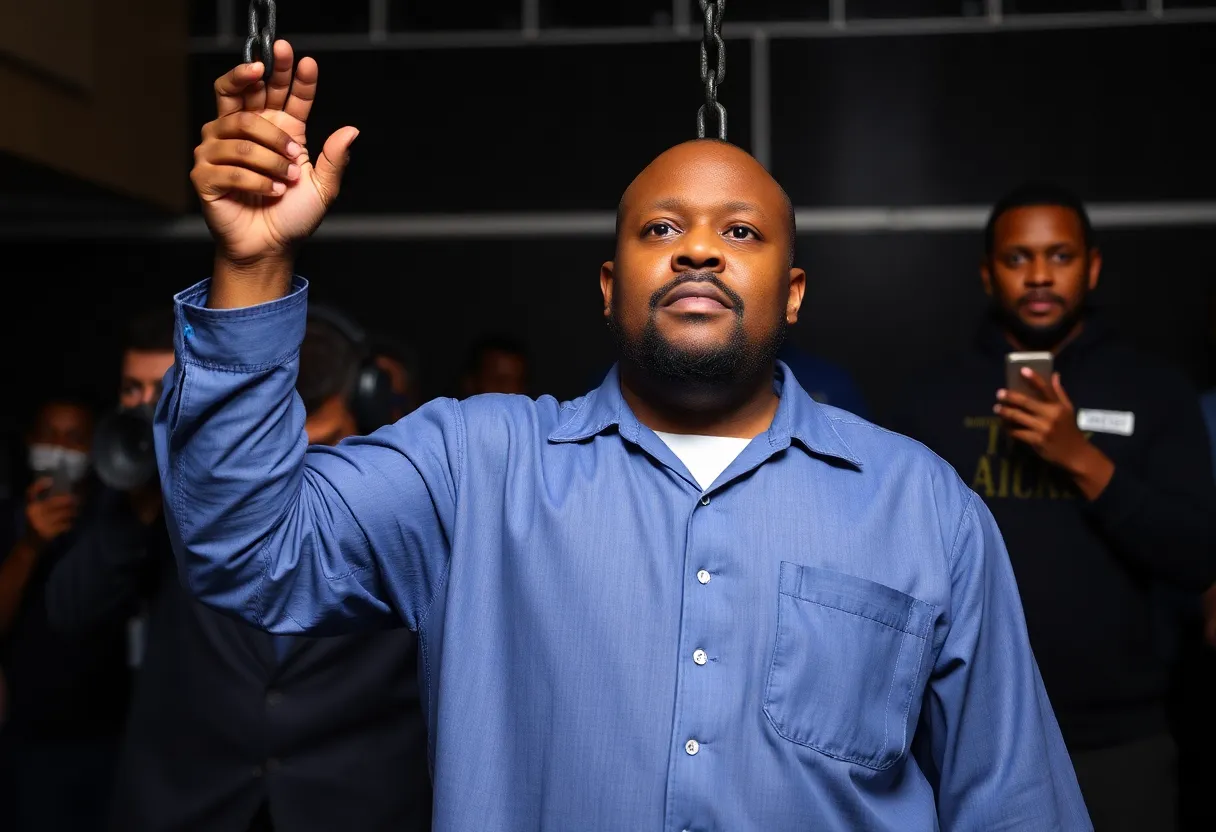
Spartanburg, South Carolina: Execution of Richard Moore Raises Controversy
On Friday evening, Richard Moore was executed by lethal injection in Spartanburg, South Carolina. The execution took place at 6:24 p.m., reported Chrysti Shain, spokesperson for the South Carolina Department of Corrections. Moore, a 59-year-old man, had been on death row for the past 25 years, convicted of murdering a convenience store clerk during a robbery.
Background of the Case
Moore was sentenced to death in 2001 after being found guilty of killing James Mahoney, who was shot during a robbery at his workplace. Prosecutors stated that during the incident, Moore, who entered the store unarmed, had an altercation with Mahoney, who attempted to shoot him first. Moore then fired a fatal shot, claiming it was in self-defense.
The execution marks the first lethal injection carried out in South Carolina in 13 years. This resurgence in capital punishment comes after challenges with obtaining the necessary drugs for lethal injections led to a hiatus.
Legal Challenges and Clemency Requests
Moore’s execution proceeded the day after the U.S. Supreme Court denied his request to delay the execution. He argued that prosecutors had excluded Black jurors from his all-White jury in violation of his rights. Complaints have been raised regarding race and fairness throughout his legal battles, with some alleging he was disproportionately tried due to the racial dynamics of the jury selection process.
Prior to the execution, Moore sought clemency from South Carolina’s Governor, Henry McMaster, but the governor denied his request. McMaster has publicly stated that he has no intention of commuting Moore’s sentence, emphasizing the seriousness of capital punishment decisions.
Support for Moore
Before his execution, over 20 individuals—including two jurors from his trial and the initial presiding judge—requested clemency on behalf of Moore. His son, Lyndall Moore, poignantly shared that his father deserves mercy, stating, “He’s a human being who made mistakes.”
In a video released as part of his clemency petition, Moore expressed remorse for his actions, acknowledging the sorrow caused to Mahoney’s family and emphasizing his love for his own family.
Conclusion and Social Implications
This case highlights significant societal issues, particularly around the death penalty, racial equity in the justice system, and the ongoing discussions about the morality of capital punishment. It raises questions about whether the legal framework is adequately addressing the complexities of race and fairness in jury selection.
As the state moves forward with its capital punishment practices, Moore’s execution serves as a crucial moment for reflection and dialogue about justice, race, and the future of the death penalty in South Carolina and beyond.


Author: STAFF HERE LEXINGTON WRITER
The LEXINGTON STAFF WRITER represents the experienced team at HERELexington.com, your go-to source for actionable local news and information in Lexington, Fayette County, and beyond. Specializing in "news you can use," we cover essential topics like product reviews for personal and business needs, local business directories, politics, real estate trends, neighborhood insights, and state news affecting the area—with deep expertise drawn from years of dedicated reporting and strong community input, including local press releases and business updates. We deliver top reporting on high-value events such as Woodland Art Fair, Crave Food and Music Festival, and Railbird Festival. Our coverage extends to key organizations like Commerce Lexington and Blue Grass Community Foundation, plus leading businesses in education, manufacturing, and technology that power the local economy such as University of Kentucky, Toyota Motor Manufacturing, and Lexmark. As part of the broader HERE network, including HEREBowlingGreen.com and HERELouisville.com, we provide comprehensive, credible insights into Kentucky's dynamic landscape.