

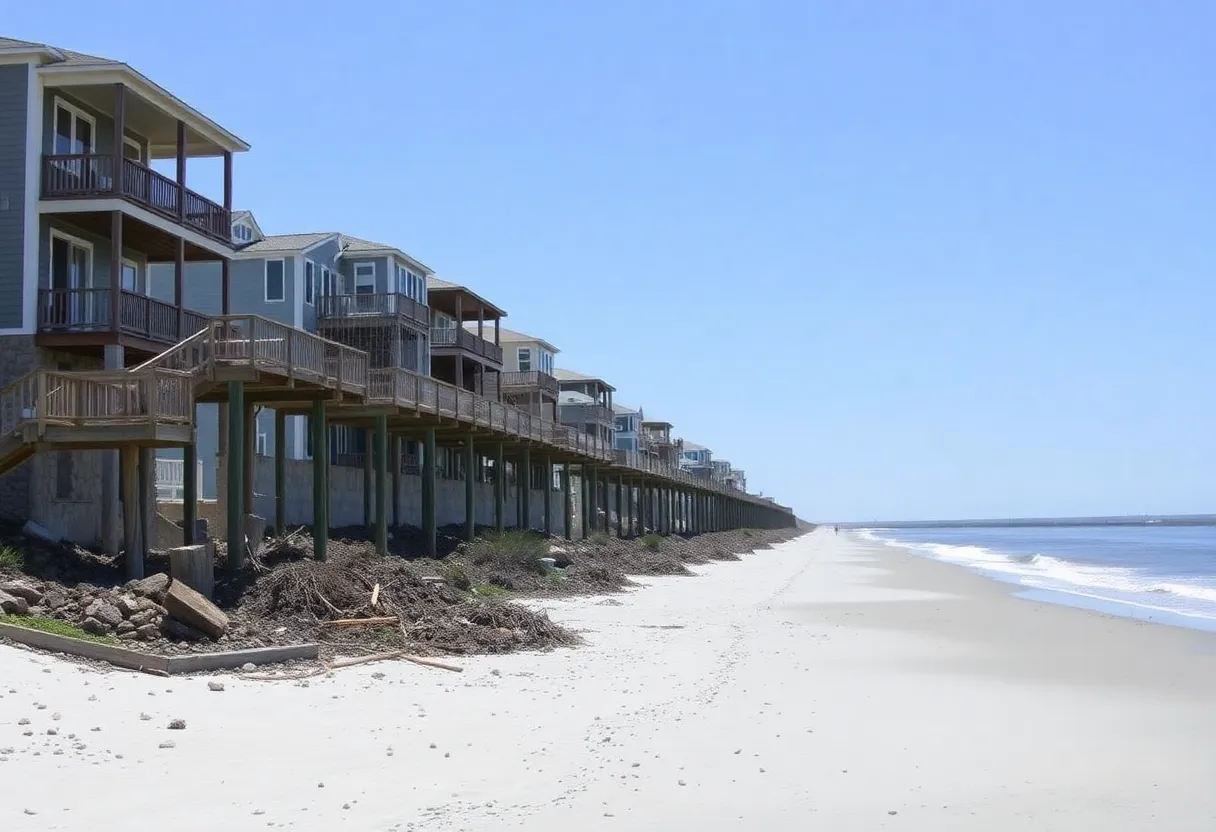
Charleston County Couple Fined $289,000 for Illegal Seawall Construction
Charleston, SC – A couple residing on the Isle of Palms is facing a staggering fine of $289,000 from South Carolina’s coastal agency for what officials deem illegal construction activities, including the building of a seawall. This penalty is one of the largest ever imposed by the state’s coastal management department in its nearly 50-year history. The couple, Rom and Renee Reddy, purchased their home on the island a decade ago and are now embroiled in a contentious legal battle with state authorities.
The Dispute
The primary issue stems from a seawall that Reddy constructed last year, intended to protect his property from the encroaching ocean. Seawalls are prohibited in South Carolina due to their potential to obstruct public beach access and exacerbate beach erosion, even while offering some level of protection to private residences. Reddy argues that the state’s actions are a form of targeting, reminiscent of the Gestapo, and claims he has faced undue scrutiny due to his challenges against regulatory enforcement.
Regulatory Conflict
Reddy has stated emphatically that his construction efforts were lawful, expressing frustration with the South Carolina Bureau of Coastal Management for what he sees as their failure to maintain the beach. He has taken legal action by suing the state’s environmental department in circuit court earlier this year, alleging that it is seizing his land for public use without compensation. Moreover, he has appealed the enforcement actions to the South Carolina Administrative Law Court.
Background on Seawall Regulations
The core of the regulatory framework includes strict rules designed to limit construction in areas susceptible to erosion. The state has established clear building restriction lines to prevent development within vulnerable zones. Property owners must secure state approval to make any alterations in these designated areas, which sometimes include the sandy beach itself. However, the Reddys found themselves at the center of a dispute after environmental regulators identified construction in front of their home.
Details of the Construction
Inspectors reported that Reddy built a 92-foot long seawall and performed other landscaping activities without obtaining the necessary permits. Such actions culminated in issuance of multiple cease and desist orders, which Reddy allegedly ignored, prompting the significant fine and orders to restore the beach area.
Community and Political Reactions
The Reddy case has garnered attention from various stakeholders, including environmentalists, property owners, and lawmakers. Some legislators argue that the coastal management rules may be too strict when it comes to protecting property values and tax revenues, likening the situation to a fight for property rights. “If regulators prevail, property rights may effectively cease to exist,” Reddy cautioned, articulating his concerns for other homeowners in similar predicaments.
Opposing Viewpoints
On the other hand, environmental advocates assert that it is essential for the state to uphold regulations intended to protect beaches from rapid erosion. They emphasize that maintaining both public access and the ecological integrity of the coastline is of utmost importance. “The state has a duty to protect the beaches for the benefit of all South Carolinians,” remarked Lauren Megill Melton from the S.C. Environmental Law Project, echoing the sentiment of many environmentalists.
Conclusion
The ongoing conflict between Rom Reddy and the state agencies encapsulates a larger debate about the balance between private property rights and environmental preservation. With legal proceedings still unfolding, the outcome will likely influence future policies concerning coastal development and infrastructure in South Carolina.


Author: STAFF HERE LEXINGTON WRITER
The LEXINGTON STAFF WRITER represents the experienced team at HERELexington.com, your go-to source for actionable local news and information in Lexington, Fayette County, and beyond. Specializing in "news you can use," we cover essential topics like product reviews for personal and business needs, local business directories, politics, real estate trends, neighborhood insights, and state news affecting the area—with deep expertise drawn from years of dedicated reporting and strong community input, including local press releases and business updates. We deliver top reporting on high-value events such as Woodland Art Fair, Crave Food and Music Festival, and Railbird Festival. Our coverage extends to key organizations like Commerce Lexington and Blue Grass Community Foundation, plus leading businesses in education, manufacturing, and technology that power the local economy such as University of Kentucky, Toyota Motor Manufacturing, and Lexmark. As part of the broader HERE network, including HEREBowlingGreen.com and HERELouisville.com, we provide comprehensive, credible insights into Kentucky's dynamic landscape.