
How to Transform Your Roof into an Eco-Friendly Oasis: A DIY Guide
In the quest for sustainability, rooftops often receive little attention. However, they can be transformed into vibrant eco-friendly spaces that not only support the environment but also enhance the aesthetics of your property. This guide will explore various methods and materials to convert your roof into an eco-friendly oasis capable of saving energy and promoting biodiversity.
Understanding Eco-Friendly Roofing
Eco-friendly roofing refers to materials and practices designed to minimize the environmental impact of constructions while improving energy efficiency. By selecting sustainable materials and implementing renewable energy solutions, homeowners can significantly reduce their carbon footprint.
Benefits of Eco-Friendly Roofs
- Energy Efficiency: Eco-friendly roofs often include reflective materials that reduce heat absorption, leading to lower cooling costs.
- Biodiversity Support: Green roofs provide habitats for various species, enhancing urban biodiversity.
- Stormwater Management: Many eco-friendly designs help manage stormwater runoff through better absorption and drainage approaches.
- Aesthetics Improvement: Green roofs or living roofs are visually appealing, offering a lush escape in urban environments.
- Longevity: Sustainable materials usually have longer life spans, leading to reduced maintenance costs and replacements over time.
Types of Eco-Friendly Roofing Options
Homeowners have various options when choosing eco-friendly roofing materials. Here are some popular choices:
Green Roof Systems
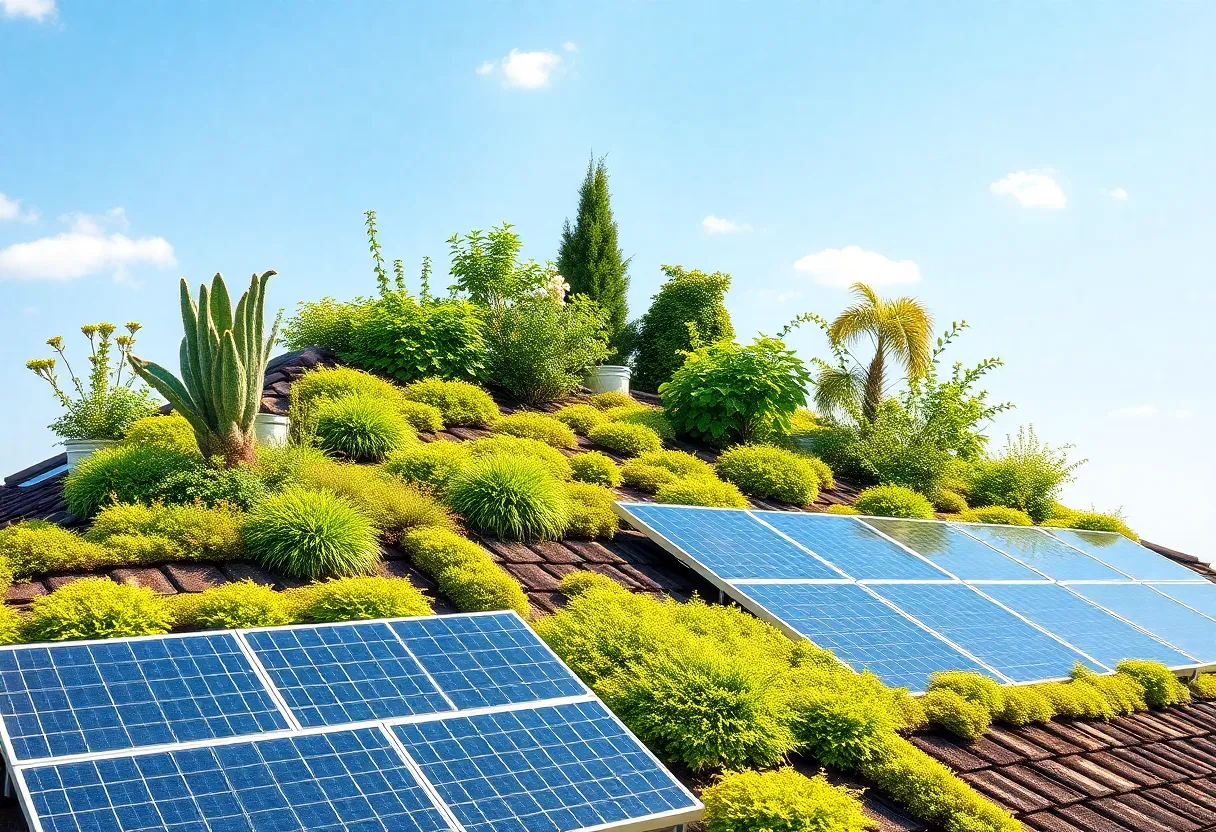
A green roof is a living system designed to reduce heat buildup and enhance biodiversity. Here’s how to install one:
- Assess your roof structure: Ensure your roof can support the weight of the soil and vegetation.
- Select appropriate vegetation: Choose native plants adapted to your climate.
- Install waterproofing membranes: This protects your roof from water damage.
- Add a drainage layer: Proper drainage prevents waterlogging.
- Apply growing medium: Use soil that retains moisture but also drains adequately.
- Plant your greenery: Arrange plants creatively for visual appeal.
Solar Panels
Installing solar panels is a direct way to harness renewable energy. Steps include:
- Evaluate energy needs: Understand your household energy consumption.
- Choose a suitable system: Options range from solar shingles to traditional panels.
- Install with care: Hire a professional or follow instructions for DIY installation.
Cool Roofing Materials
Cool roofs are designed to reflect more sunlight and absorb less heat. You can achieve this by:
- Using reflective coatings: Apply a reflective coating on existing roofs.
- Choosing high-albedo materials: Select roofing materials specifically made for cool roofs.
Steps to Create an Eco-Friendly Roof
1. Planning and Preparation
Before embarking on your eco-friendly roof transformation, consider the following:
- Local regulations: Check building codes or zoning laws regarding roof constructions.
- Budgeting: Determine your budget for materials and installation.
- Professional Help: Assess if you need professional assistance for installation.
2. Selecting Eco-Friendly Materials
Opting for the right materials is crucial for a sustainable roof. Consider:
- Recyclable materials: Choose metal, slate, or tile, which are often recyclable.
- Local sourcing: Reduce transportation emissions by sourcing materials locally.
- Energy-efficient options: Insulation materials can work wonders for energy efficiency.
3. Installation Process
The installation process will vary depending on the chosen approach. Here are general guidelines:
- Safety first: Wear protective gear and ensure a sturdy ladder for access.
- Follow specific instructions: Adhere strictly to installation guidelines from manufacturers.
- Post-installation checks: Inspect for any materials or plants that need adjustments.
Maintaining Your Eco-Friendly Roof
Once transformed, an eco-friendly roof requires ongoing maintenance to remain effective. Consider the following:
- Regular inspections: Check for leaks, structural integrity, and plant health.
- Weed control: Regularly remove weeds that can compete with desired plants.
- Watering: Ensure plants are adequately watered, particularly during dry spells.
Conclusion
Transforming your roof into an eco-friendly oasis not only contributes to a healthier planet but also enhances your home’s energy efficiency and aesthetic appeal. With careful planning, the right materials, and ongoing maintenance, you can create a space that thrives in harmony with nature. Take the initiative today and join the movement towards sustainability.
Frequently Asked Questions
What are the benefits of an eco-friendly roof?
An eco-friendly roof enhances energy efficiency, supports biodiversity, manages stormwater effectively, improves aesthetics, and offers longevity through sustainable materials.
How do I install a green roof?
To install a green roof, assess your roof structure, select appropriate vegetation, install waterproofing membranes, add a drainage layer, apply growing medium, and plant your greenery.
What materials can I use for a cool roof?
For a cool roof, you can use reflective coatings on existing roofs or select high-albedo roofing materials specifically engineered for cool roofs.
How can I maintain my eco-friendly roof?
Maintain your eco-friendly roof by conducting regular inspections, controlling weeds, and ensuring adequate watering for plants.

Author: STAFF HERE LEXINGTON WRITER
The LEXINGTON STAFF WRITER represents the experienced team at HERELexington.com, your go-to source for actionable local news and information in Lexington, Fayette County, and beyond. Specializing in "news you can use," we cover essential topics like product reviews for personal and business needs, local business directories, politics, real estate trends, neighborhood insights, and state news affecting the area—with deep expertise drawn from years of dedicated reporting and strong community input, including local press releases and business updates. We deliver top reporting on high-value events such as Woodland Art Fair, Crave Food and Music Festival, and Railbird Festival. Our coverage extends to key organizations like Commerce Lexington and Blue Grass Community Foundation, plus leading businesses in education, manufacturing, and technology that power the local economy such as University of Kentucky, Toyota Motor Manufacturing, and Lexmark. As part of the broader HERE network, including HEREBowlingGreen.com and HERELouisville.com, we provide comprehensive, credible insights into Kentucky's dynamic landscape.
 Mays Contracting